Sunday, 27 July 2014

Still spending but no time to write

It has been 2 months since my last post! Lines of new toys have since been released since then - LG G3, OnePlus One, Mi Pad, Mi 4, etc etc... Just show how quickly technology products are released.

Wish I have all the time and money to play with them. But I'm not gonna find excuse cos of my laziness.
Shall be back soon!

Friday, 30 May 2014

Samsung Galaxy S4 – One Year Later

No, this is not about a new gadget. Technologies move so fast that most gadgets have rather short product cycle. By the first month of a product launch (sometime even before the launch), the craze would be over, and everyone moved on to the next shiny new toy.

This is my take of the one-year old Samsung Galaxy S4.

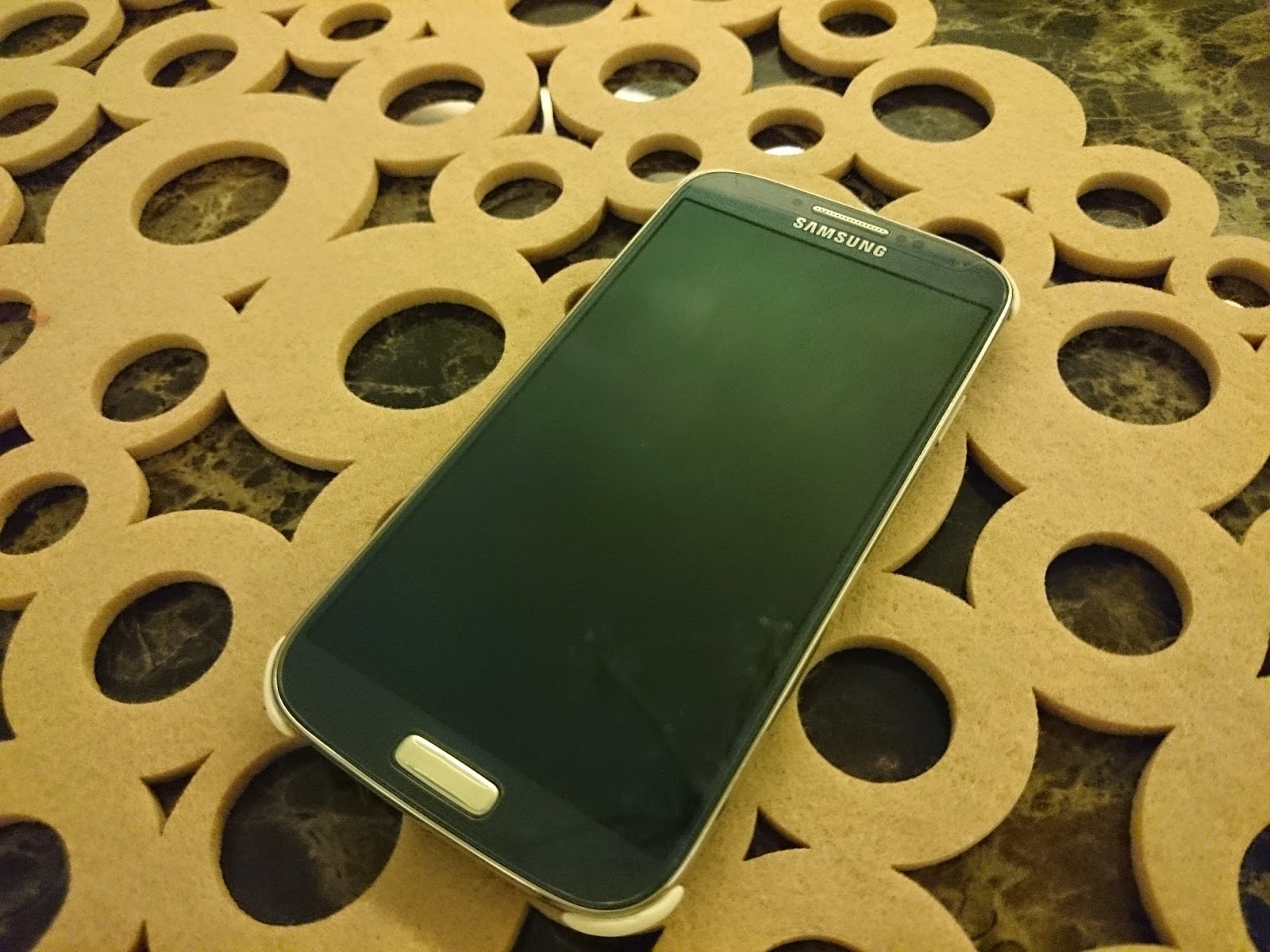
S4 with Sugru corner bumper

I have not used a Samsung phone prior to the S4. For some reason, I am not a Samsung fan – I don’t associate Samsung as cool, and they are definitely not value for money judging from their recent price list. While my view hasn't changed after using the S4, I get to understand why people buy it. In fact, it has just become my longest serving smartphone.

The evolution and lack of


Not long ago before the S4, the Galaxy lines were still in the shade of iPhone. It started off as little knockoff, there is no two ways about it. But that i-mould has certainly faded away since the S3 came about. More importantly, should you care? Unless you are an iFan or Apple shareholder, there is really no reason to be upset about competitors stealing the good and useful features from one another. In fact, the competition is only good for us as the consumers. Although you could, you don’t reinvent the wheels to build a car. That’s how technology evolves at a faster speed.

The pebble shaped S3 is the big leap of the Galaxy lines in terms of design language. It found its own style with little shadow from the iPhone-ish S2. I would actually rate S3 as the best design among S1 – S5. Perhaps because of the success, Samsung became overly cautious in the subsequent releases in S4 and even S5. There was no significant change to the design, other than it getting bigger and more angular. The continuation of material choice also left little to be desired of. S3 was a breakthrough, S4 was sleek, and S5 was just pure boring and arguably a step back. Responses from the recent launch events were evident of that disappointment. Hopefully the departure of the Galaxy’s Chief Designer represented a new chapter of the Samsung flagship.


Why is it a keeper?

Although it does not stand out in its look, S4 is a well-built device. The thin bezels still look as sleek next to the freshly baked S5. I am happy to report that my S4 withstood a full year of daily use, and aged gracefully. Admittedly, I am very careful with all my gadgets. The plastic made body is not as flimsy as it sounded. There is no loose, or deformed parts because of normal wear and tear. Buttons remain responsive, and the battery continues to serve me for about a day.

Samsung produce hardware components, and keep the best and the latest for themselves. A prime example is its AMOLED screen, which is arguably the killer feature of Samsung phones. The AMOLED screen is known for its vibrant and saturated colors, with deep black, and great power efficiency. Some people may find the popping colors unnatural, but they are undeniably beautiful screens. I actually know a few friends who are reluctant to switch just because of the screen.

Another popular feature is its expandability. S4, like the other Galaxy devices, has a removable back. When unveiled, you can find options to add more storage (sd card), more battery life (extended battery), better NFC detection, wireless charging extension, or simply change the look of the phone. It is this “option” that many of us really appreciate. In many ways “option” is also the essence of Android.

with wireless charging receiver

There is almost no major flaw (less the design yes) with the S4. It has one of the best camera, great battery life, descent speakers and what not. The phone is still running smooth and strong after one year, during which different versions of Jellybean and KitKat have been rolled out.

Using a mass popular phone model also means that there is vast range of accessories available. Ask a Nokia user and you will know the pain of being special. There is also more resources and support e.g. in the form of forums like XDA.

I find it strange that there is no urge for me to change the phone. Considering I am not exactly a Samsung fan, and I used to upgrade every 6 months in average. Perhaps it is the overall usability of S4, or perhaps it is the maturity of the smartphone industry. The latest range of smartphones no longer beat the last generation by miles.

Samsung, and in fact all manufacturers, needs a breakthrough. Something that is truly special AND useful. Or risk becoming the next Nokia and Blackberry.

For now I am still enjoying the old S4...... wait, is that a LG G3?!

Wednesday, 2 April 2014

Flip Back the Time - TWEMCO Clock

Unlike their smaller counterpart on the wrist, wall clocks do not normally get much attention. Although they serve the same purpose to tell time, the technology and craftsmanship of watches are valued more than the bigger and often more boring wall clocks. That said, clocks can be an important fixture, or even a fashion statement.

I love flip clocks in particular. The movement when the flaps flip fascinates me. One of the reasons why I got the HTC phone years ago, was because of their trademark flip clock widget.

There are not many flip clock manufactures around the globe. One of them, the Hong Kong based TWEMCO, has been building just that for more than 50 years.

TWEMCO clocks have an unmistakable minimalist retro design. Because of the mechanism, TWEMCO clocks are quite thick, but weigh lighter than its look suggest, due to the plastic body. The contrasting white text on the black flaps makes it easy for telling time. TWEMCO clocks are tuned with Germany  movement, which has high precision and is battery friendly. Some of the models even come with date and day of the week.

I have a 6 year old TWEMCO clock which is still flipping strong. Just recently, my wife suggested we get a conventional clock for the little ones at home, so they can learn to read time. Fair enough I thought. But in the end I can't resist another TWEMCO; albeit this one comes with the conventional clock hands, it still has the flipping calendar!


Thursday, 20 March 2014

Potential Yardstick of Smartwatches - Moto 360

An iconic product design is hard to come by. More recently in the 21st century, you may have witnessed the likes of Motorola Razr V3, iPod 2, HTC Diamond, IntelliMouse Explorer, iPhone 3, B&O A8, Macbook Air and etc. Some of these were so important it broke away as THE yardstick that defined a product line, and made it widely adopted.

Fast forward to 2014, a new product line that the IT industry is pushing very hard to make it happen is the wearable tech. Looking at the current poster boys e.g. the Glass, and Pebble, it is not hard to tell that it has not taken off yet. While Pebble does come close, and in fact is very usable, it is lacking the whoa factor.

Introducing Moto 360.


One of the two devices which represented the introduction of Android Wear, Moto 360 comes with an exciting form factor - it is circular. The significance of it is that it looks like a normal watch, and a cool one. Apparently more than 80% of the watch faces are round in shape. Motorola is hoping that its fashion come first product will break the mass public resistance to wearable tech. 

There are still a lot of unknown, like the battery life, screen resolution, and most importantly the software Android Wear. The visual of the Wear in the introduction video seemed very likable. The UI also appeared to be rather fluid from the Endgadget interview, when Moto 360 designer Jim Wicks showed off a working prototype.


Will Moto 360 finally become that yardstick of smartwatches? Let's find out later in the summer.


Sunday, 9 March 2014

Cardsharp2 - a Cool Wallet Card Knife

I'm not a knife collector, neither do I know how to appreciate a sharp blade.
But it is not hard for someone to like Iain Sinclair's Cardsharp2, a utility knife that also fits into your wallet.


Shaped in the form of a credit card, and weighing merely 13 grams, Cardsharp2 is extremely portable. You may leave it in your wallet, and totally forget about its existence - happened to me once at the custom security check! The blade of the knife is made of "surgical steel" which I guess is a type of less premium stainless steel, while the body is made of hard plastic. After you unlock the safety catch, it only requires 3 folds to convert the card into a knife. 


Because of the bendable parts, the grip of the knife is not as solid as those swiss army knives or other dedicated knives. The blade of the knife is also not samurai sharp. But hey that's okay, Cardsharp2 is not meant to replace those hard use knives. It is more for the convenience, and the occasional situations where you are out about, and need to slice something open.


When those rare emergencies arise, you can almost hear the James Bond theme ring in the background when you take that Cardsharp2 out...

Friday, 7 March 2014

Another Round of Sale, Another Sold Out Record

You must be bored of this by now.
To be honest, so am I. Though I'm not complaining - yes, the play-hard-to-get is annoying, but you can't deny that it is good value for money.

At the end of the day, you have choices. For the willing buyers, better luck next time.


Saturday, 1 March 2014

Redmi Singapore Full Review

There is no surprise that the last 2 online orders of Redmi were sold out within minutes. The SGD$169 Xiaomi phones are highly sought after due to its value for money proposition. Xiaomi SG Facebook page has since been filled with hate messages from those who could not land a phone, citing technology glitches, supply shortage, marketing gimmicks and etc. Regardless of the claims, one thing certain is that Xiaomi has successfully created the hype and gotten the attention in Singapore.

The Package

I was lucky to have gotten 1 from the first launch on 21st Feb, and the parcel reached me rather quickly on 25th Feb. In typical Xiaomi style, the packaging comes in the form of plain brown cardboard boxes with minimalist design, which may remind you of the Japanese brand Muji. The items are well packed, and look safe enough to travel across from China.


The Singapore standard package comes with the Redmi handset itself, a micro USB cable for charging and data transfer, x2 micro to normal SIM adaptor, and a 3 pin wall charger. If you opted for the additional accessories which cost S$28, you will also get a silicon case, x3 screen protectors, an extra battery, and an external battery charger.

Design and Hardware

Most of us will agree that Redmi does not stand out in the design department. It is by no means ugly, it is just plain. From the front, Redmi is a vertical rectangular block with small rounded corners, and plenty of extra bezels. The body curves in from the 2 long sides to the back, making it more comfortable to hold. Contrary to what its name seem to suggest, Redmi is not red; at least not the first few batches from the initial SG launch. The only thing in red here are the 3 capacitive buttons at the bottom of the phone. Speaking of which, these buttons have no backlit, hence you may find it difficult to use at night.


Although the body is made up of plastic, the phone felt solid in the hand thanks to its tight build and substantial weight. The phone does not squeak or flex when you squeeze it. The back of the phone is replaceable, and can be opened up to reveal the SIM and micro SD slots. Interestingly, the side buttons are attached to the back cover, which is a rare design in recent years, and kind of remind me of Nokia 3210.


Hardware-wise, the main specifications include a quad core, 1GB RAM, 4GB ROM, 720p 4.7” IPS LCS screen. The same specs would be a flagship in 2012, and they are still decent for 2014 standard. It is almost certain that you will need an additional micro SD card, as the 4GB storage (half of that is occupied by system files) is likely insufficient for you digital life.

One interesting feature is the dual SIM offering, which is very popular in mainland China. Unfortunately there is no 4G here. The 1st SIM card slot is 3G capable, while the 2nd slot only allows GSM. Practically it means that you can have one data plan, and two active voice plans on this phone. Busy businessmen and people who often need to travel between countries may find this feature rather useful.

Mobile connectivity aside, Redmi is also equipped with Wifi/ Wifi Direct, Bluetooth 4.0, and GPS. They have been tested functioning as it should.

Performance and Experience

The Redmi’s 720p screen is pleasing to the eyes. At 312 ppi (iPhone 5s 326 ppi), it delivers fine texts and sharp images. The colors do tend to be a little colder, but are largely accurate and natural.  However the screen is not without qualms. The screen looks cheap in grey shade when the device is switched off or on standby, and appears to sink slightly below the glass surface. Although it does not affect the general use of the phone, it is something that you will notice if you have ever use an OGS phone. Although Redmi’s display is supposed to be IPS, the screen seems overly reflective, and does not provide good viewing from deviated angles, or under direct sunlight.


The combination of quad core cpu and 1GB Ram sounds pretty powerful on paper. I’m happy to report that it is not far off in actual use. I have not experienced any major lag or force restart, when switching between applications e.g. phone, YouTube, Facebook, browser, Whatsapp and etc. Unlike the other major brands and Xiaomi’s own Mi3, Redmi opted for the cheaper Mediatek’s MTK6589T chipset, instead of the more established Snapdragon or Tegra 4. Other than the lower benchmark, one potential concern to the hardcore gamers is that heavy 3D games may not run as well on Redmi, due to the weaker GPU.

Hardware only tells half the story, the real star here is its operating system called MIUI which delivers that smooth user experience. Built based on Android (Redmi is on 4.2.2), MIUI customization is beyond skin deep, and will certainly give any avid android users a refreshing feel of the OS. If you are IOS user, you may find it easier to pick up than the usual Android. Some aspects of MIUI may resemble IOS e.g. the launcher, except it gives you more control and customization as compared to the rather locked system. Some highlights of MIUI include the ability to change theme, cloud backup support, and options which are normally only accessible in other rooted Android phones e.g. assign long press button action. The Singapore iteration of MIUI come default with Google services, which are otherwise omitted in China. What is more surprising is that MIUI own App Store is nowhere to be found. Could it be that the Chinese based MIUI App Store was not ready for prime time, or was it swapped because of licensing issue? In any case the move is a welcoming one.


I am pleasantly surprised by the Redmi’s 2,000mAh swappable battery. In my actual usage test, a full charge lasted me an entire day, with 4 hours screen on time. During which, I had push email and messaging always on, occasional short calls, YouTube, browsing Feedly/ Facebook/ web pages, and testing out the cameras. Overnight standby drain was below 5%.


Media and Camera

Redmi has no problem playing all sort of video formats. Similar to other Android devices, you can always download a 3rd party video player that come with your desired codec. As a music player, Redmi performs fairly well. There are several audio options and equalizer under the system setting that help tuning to your liking. I have also tested it successfully with a pair of bluetooth earphones. The wireless connection is reliable, has no noise or noticeable distortion to the sound quality. Its Bluetooth 4.0 should in theory be more battery friendly.


One complaint I have is the soft volume when talking on the phone. I have to keep it at maximum level, and even with that I find it hard to listen what the other side is talking in a noisy environment.

Redmi’s 8MP f2.2 camera on the other hand, produces good photos. While I won’t swap it with my S4 just yet, I am happy to bring it out for shooting on a bright day. The outdoor shots are generally sharp, with accurate colors. The auto focus reacts pretty fast, and the simple interface helps to avoid any missed moments. Night shots are acceptable with good amount of noises. Other extra camera features include burst shots, HDR, panorama, and 1080p video recording.

Outdoor shot
Outdoor shot
HDR mode - against strong sun light
Close up - background blur
Close up
Low light shot
Low light shot
Panorama shot


Conclusion

If you are looking for a tight budget phone, or simply just need a basic smartphone, the S$169 Redmi is hard to beat. There are a lot to like about Redmi other than its affordable price. I truly enjoyed the MIUI, and thought the display (when viewing straight on) and the decent camera are the highlights of this phone. It does not have the whistles and bells, but when you look at the overall package, it is easy to forgive its shortcomings.

Simply put, Redmi is probably the best smartphone in the sub S$200 category (among those officially retailed in SG) at the moment.

The best part of this is that Xiaomi is giving other competitors a run for their money, with its price aggressive propositions. It will no doubt be putting pressure on the others, in terms of pricing over offering, if Xiaomi continues its run of success. Hopefully it means that the consumers will have the last laugh.


Update -- 10th Mar 2014
Redmi does look better in red.